New Australian research explains why eating nuts doesn’t lead to weight gain

New Australian research explains why eating nuts doesn’t lead to weight gain
People who regularly eat nuts tend to weigh less than people who don’t – and Australian researchers have examined two decades of research to explain why (1).
Published in Frontiers in Nutrition, the review connects the dots for the first time between multiple mechanisms that underpin why regular nut consumption does not typically lead to weight gain. It was led by researchers from FOODiQ Global, University of Newcastle and Australian Catholic University.
The review suggests that nuts support metabolic health through several interconnected pathways, including appetite regulation, improved insulin sensitivity, beneficial gut bacteria and lower inflammation. Together these mechanisms may help explain why regular nut consumption does not typically lead to weight gain.
The review also highlights the important role the structure of whole nuts plays in the way the body absorbs kilojoules. Some fat remains trapped within the nut’s fibrous cell walls during digestion, meaning the body absorbs up to 26 per cent less energy from whole nuts than standard food calculations predict.
Belinda Neville, dietitian and Program Manager at Nuts for Life, said the research should reassure Australians who think they need to avoid nuts because they are worried about weight gain.
“Concerns regarding weight gain remain a key barrier to eating nuts, with consumption in Australia well below recommended intakes,” said Ms Neville.
“This review challenges the idea that weight management is just about counting kilojoules. When it comes to nuts, it’s the whole food that matters. Their unique structure, healthy fats, plant protein, fibre and bioactive compounds work together in the body, influencing how we digest and absorb energy, regulate appetite and support metabolic health.”
“The findings reinforce that nuts should be seen as an ally in weight management, not a food to avoid.”
Australians consume an average of just 4.6 grams of nuts per day, with only around two per cent eating the suggested 30-gram daily handful (2), despite strong evidence linking regular nut consumption with improved health outcomes (3).
“A daily handful of nuts is one of the simplest evidence-based dietary habits Australians can adopt. From supporting heart and metabolic health to healthy ageing, this research gives people even more reasons to include nuts every day.”
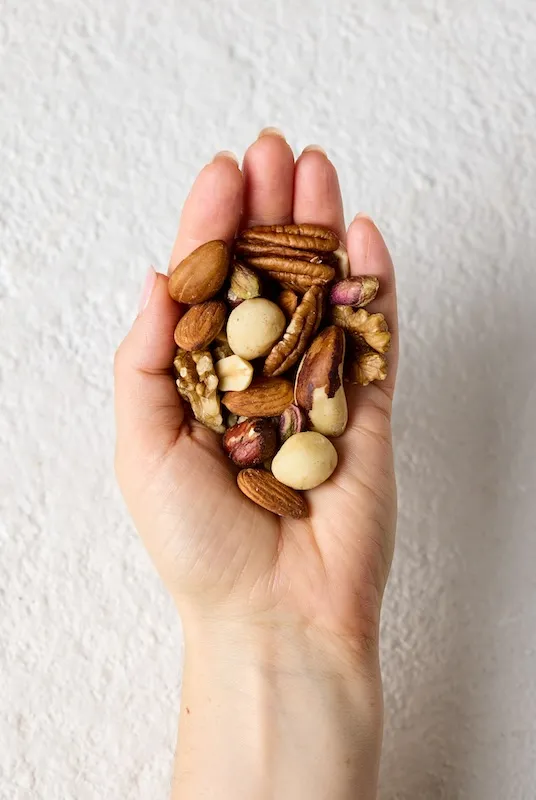
The Australian Dietary Guidelines recommend choosing unsalted nuts, with one serve being 30g, or around a handful. This can include almonds, Brazil nuts, cashews, chestnuts, hazelnuts, macadamias, peanuts, pecans, pine nuts, pistachios and walnuts.
References
- Cassettari TD, Starck CS, Beckett EL, Fayet-Moore F. A conceptual framework integrating mechanisms linking nut consumption and energy balance. Frontiers in Nutrition. 2026. 13:1834816. https://doi.org/10.3389/fnut.2026.1834816
- Nikodijevic CJ. et al. Nut consumption in a representative survey of Australians: A secondary analysis of the 2011-2012 National Nutrition and Physical Activity Survey. Public Health Nutr, 2020. 1-11.
- Balakrishna R. et al. Consumption of nuts and seeds and health outcomes including cardiovascular, diabetes and metabolic disease, cancer, and mortality: An Umbrella Review. Adv Nutr, 2022.

For information purposes only. ©2026 Nuts for Life