
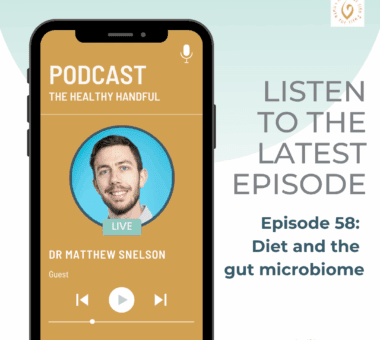
Episode 58 – Diet and the gut microbiome
March 2026. Listen here: And available everywhere you listen to podcasts: https://pod.link/thehealthyhandful About this episode In this episode, we speak…

Emerging research suggests a role for nuts in eye health. Here are some of the key papers, published to date, in this area.
Food groups and risk of age-related macular degeneration: A systematic review with meta-analysis. (Dinu et al, 2018).
Nut consumption was not associated with the risk of age-related macular degeneration, although a non-significant reduction was reported that became significant after the removal of one study. The evidence base is small and further research is required to better determine the nature of the association.
Healthy dietary patterns and risk of major eye diseases: Evidence from nationally population‐based data and bibliometric analysis. (Xiao et al, 2026).
This nationally-representative, cross-sectional study, of 4,242 US adults, examined associations between dietary patterns and major eye diseases. Higher Healthy Eating Index-2020 (measuring how well diets align with the Dietary Guidelines for Americans) scores and DASH scores were associated with lower risk of retinopathy and overall risk of eye diseases, while higher Mediterranean diet scores were specifically linked to reduced retinopathy risk. Associations varied across population subgroups. Whole grains, vegetables, and nuts emerged as protective components, whereas refined grains were identified as a potential risk factor. The researchers say high‐quality prospective studies and clinical trials are required to validate the preventive potential of dietary interventions.
Pistachio consumption increases macular pigment optical density in healthy adults: A randomized controlled trial. (Scott et al, 2024).
This randomised controlled trial involved 36 middle-aged to older healthy adults, with a low intake of the plant pigments, lutein and zeaxanthin, and a low macular pigment optical density (MPOD) at baseline.Over the 12-week study, half the participants continued with their usual diet (UD), while the other half added 60g/day of pistachios to their UD. Compared to UD, the MPOD of the participants in the pistachio group significantly increased over the first 6-week study period, and this was maintained at 12 weeks. MPOD in UD participants did not change. The findings suggest that pistachio consumption could be an effective dietary strategy for preserving eye health.
Published January 28, 2020

For information purposes only. ©2026 Nuts for Life
March 2026. Listen here: And available everywhere you listen to podcasts: https://pod.link/thehealthyhandful About this episode In this episode, we speak…
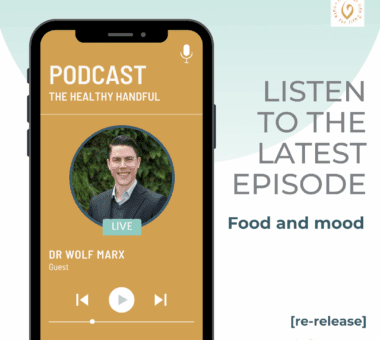
February 2026. Listen here: And available everywhere you listen to podcasts: https://pod.link/thehealthyhandful About this episode Just like the rest of…

The body of evidence about nuts and mental health continues to grow, with new local and international research papers regularly…
Be sure to follow us for great recipes,
Nut inspirations and fun facts
For up to date information & the latest research articles