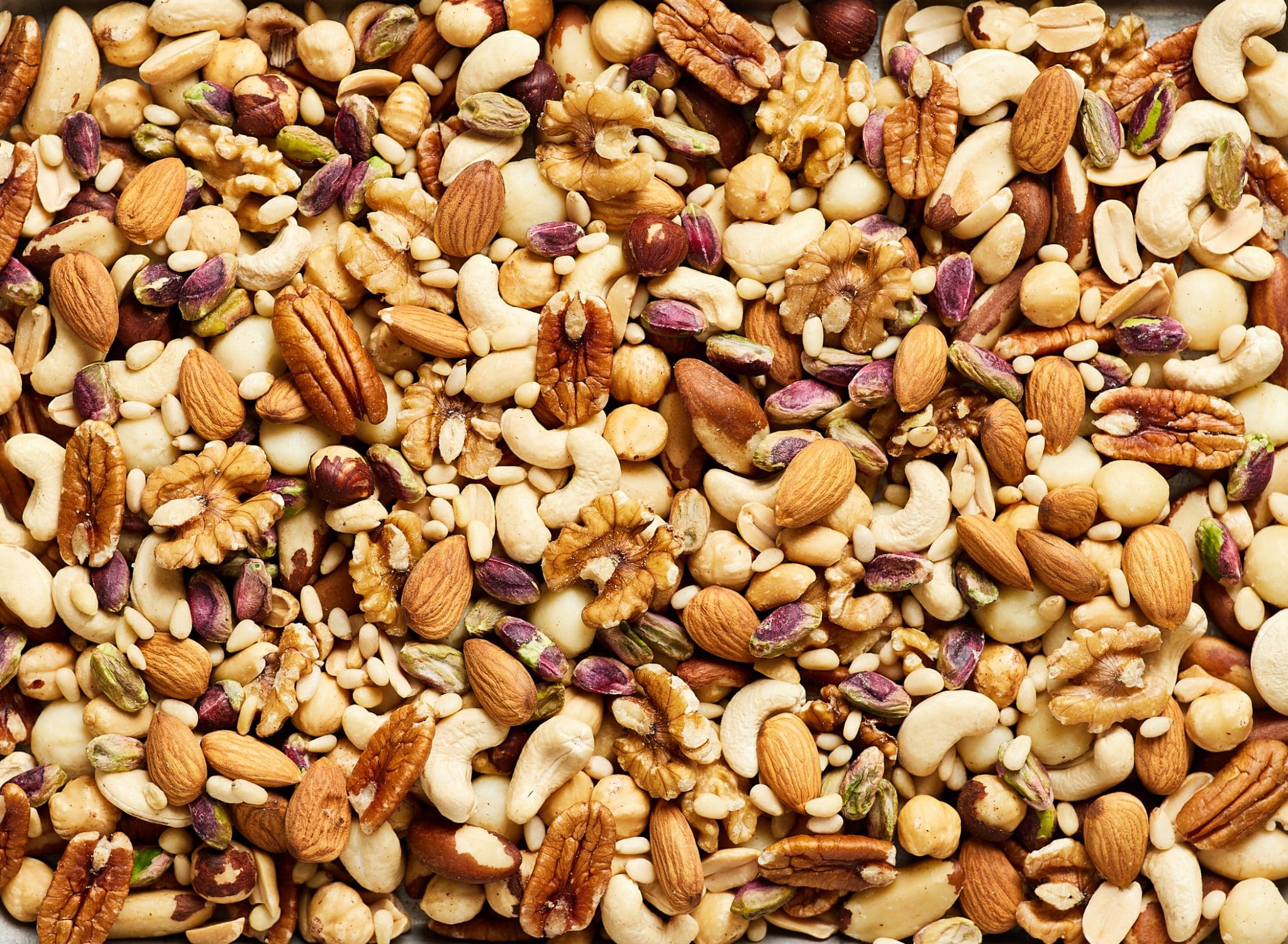
Nuts: An everyday superfood for heart health

Nuts: An everyday superfood for heart health
Daily consumption of nuts linked to major cardiovascular benefits
The Heart Foundation is joining forces with Nuts for Life, which represents Australia’s nut growers and associated organisations, to dispel myths and misinformation about the health benefits of nuts as part of a heart-healthy eating pattern.
Evidence shows that eating a handful (30g) of unsalted nuts each day can reduce a person’s risk of developing cardiovascular disease by 21 per cent and coronary heart disease by 25 per cent (1).
But despite the established links of nut consumption to a range of health benefits, nuts are poorly consumed nationally, with just 2 per cent of people in Australia eating 30g of nuts each day (2).
To encourage people in Australia to become aware of the heart health benefits of nuts, the Heart Foundation can today announce a partnership with Nuts for Life, a project of the Australian Nut Industry Council.
Heart Foundation dietitian Jemma O’Hanlon recommended regular unsalted nut consumption as part of a heart-healthy eating pattern and said the nutrient-dense wholefood could help reduce a person’s overall risk of cardiovascular disease.
“Nuts are so versatile and there are so many types that we can include as part of a heart-healthy eating pattern such as walnuts, almonds, pistachios, peanuts, pecans, hazelnuts or macadamias,” Jemma said.
“Unsalted nuts are the ultimate snack, being rich in fibre, healthy fats, protein and antioxidants that support good cholesterol and reduce heart disease risk. Nuts keep us fuller for longer and help us to maintain a healthy weight, quite the contrary to what people may think. Many people don’t realise that up to 26% of the kilojoules in nuts are not absorbed by the body.
“For people who can eat nuts, adding a handful, about 30g, to their daily intake is something that is practical and achievable and will go a long way to improving their heart health.”
Jemma recommended people in Australia opt for unsalted nuts because salted nuts increased sodium intake which is a risk factor for high blood pressure and cardiovascular disease.
Belinda Neville, Program Manager at Nuts for Life, said the partnership united two trusted voices in nutrition and health.
“We’re delighted to be working with the Heart Foundation to highlight a daily nut habit as a simple, evidence-based way to improve heart health, as part of a heart-healthy eating pattern,” Ms Neville said.
Heart Foundation CEO David Lloyd welcomed the partnership with Nuts for Life and said it would encourage people in Australia to prioritise nutrition choices that were beneficial for heart health.
“By joining forces with Nuts for Life, we aim to encourage people in Australia to consume more nuts as part of a heart-healthy eating pattern,” Mr Lloyd said.
The Heart Foundation’s website has a range of free recipes including nuts available on its resource hub, such as Fruit and Nut Muesli, Warm Roasted Cauliflower, Broccoli, Walnut and Lentil Salad, Nutty Banana Loaf and One bowl date and walnut loaf .
Jemma’s top tips for including unsalted nuts into a heart-healthy eating pattern:
- Snack on a handful of nuts
- Sprinkle nuts over breakfast cereal or yoghurt
- Toss nuts into salads as a crunchy topper
- Bake with nut meal (ground nuts) or bake with nuts in slices
- Spread nut butter on grainy toast or add nuts to curries or stir-fries.
How many nuts are in a 30g handful?
Note: 30g is equivalent to ¼ cup nuts or 2 tablespoons of nut butter
- 20 almonds
- 10 Brazil nuts
- 15 cashews
- 4 chestnuts
- 20 hazelnuts
- 15 macadamias
- 40 peanuts
- 15 pecans
- 2 tablespoons pine nuts
- 30 pistachio kernels
- 10 whole walnuts.
Webinar for healthcare professionals
The Heart Foundation in partnership with Nuts for Life are hosting a free webinar for healthcare professionals including dietitians, nutritionists, GPs, fitness professionals and practice nurses on ‘Fibre and Heart Health: The Forgotten Hero’.
Date: Thursday 19th March 2026
Time: 12.30pm AEDT (1 hour duration) via Zoom
For information on how to register visit https://hrt.how/fibre
References
- Balakrishna, R., et al. Consumption of nuts and seeds and health outcomes including cardiovascular, diabetes and metabolic disease, cancer, and mortality: An umbrella review. Advances in Nutrition, 2022. nmac077, https://doi.org/10.1093/advances/nmac077
- Nikodijevic, C., et al., Nut consumption in a representative survey of Australians: A secondary analysis of the 2011-2012 National Nutrition and Physical Activity Survey. Public Health Nutrition. 2019; 23(18):3368-78. https://pmc.ncbi.nlm.nih.gov/articles/PMC7737041/

For information purposes only. ©2026 Nuts for Life