

Food and mood [re-release]
February 2026. Listen here: And available everywhere you listen to podcasts: https://pod.link/thehealthyhandful About this episode Just like the rest of…

Long-term studies show that people who eat nuts regularly gain less weight over time (1).
Understanding of body weight regulation is evolving. Modern science highlights metabolic function as a key factor – and nuts have emerged as foods that support key biological systems in the body, which, in turn, may support a healthier weight over time.
And part of the ‘metabolic advantage’ of nuts comes from their unique nut matrix.
Did you know? Emerging research suggests that calorie quality – not just calorie density – plays a key role in shaping metabolism, satiety, and weight outcomes.
Current explanations for why nuts do not generally promote weight gain have focused on the immediate ’24-hour’ effects of nuts on energy balance (1). This includes the satiating effect of nuts, which helps reduce the likelihood of overeating later, and their reduced metabolisable energy.
But such explanations may not fully explain why nuts are linked with reduced weight gain over time.
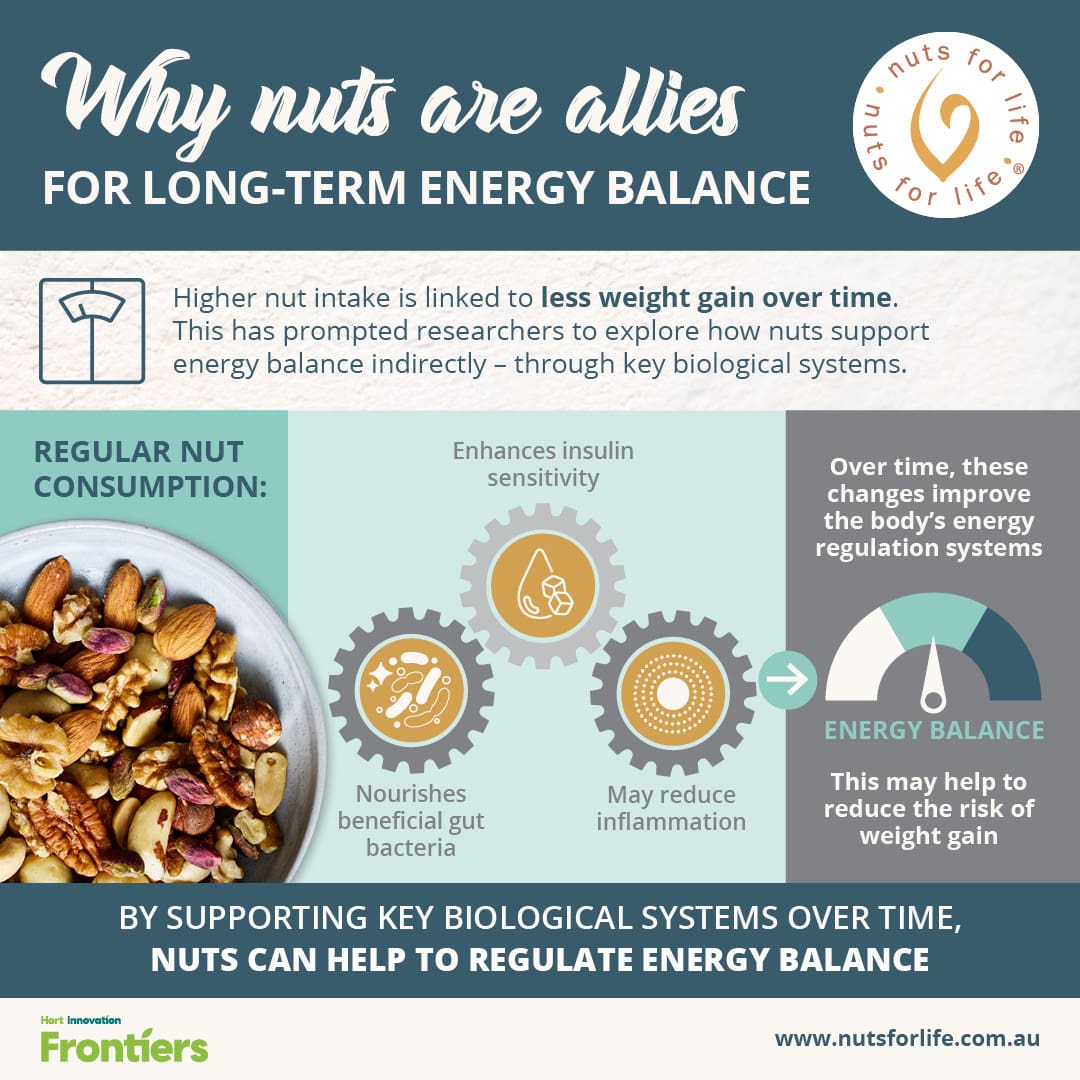
Emerging research from randomised trials suggests that nuts may actively support the metabolic systems that regulate body weight. This includes through favourable changes in gut microbiota, improved insulin sensitivity, and modest reductions in inflammation.
While body weight is fundamentally governed by energy in versus energy out, we now understand that both sides of that equation are influenced by a complex web of biological systems.
Nuts are rich in dietary fibre and polyphenols, which act as fuel for beneficial gut bacteria. While the evidence-base for nuts and the gut microbiota is at an early stage, research shows nut consumption can increase microbial diversity and promote beneficial bacteria linked to improved metabolism (2,3).
Nuts improve how the body handles glucose and insulin. A systematic review found that nut consumption improves glycaemic control in people with and without diabetes (6). Better insulin sensitivity helps the body use energy more effectively, making it less likely to be stored as fat.
Nuts also contain bioactive compounds with anti-inflammatory properties. Chronic low-grade inflammation is thought to play a role in weight gain and obesity. By reducing inflammatory markers, nuts may help protect against this (4,5).
These mechanisms, which are closely linked, combine to create a ‘metabolic advantage’ – suggesting that nuts may support underlying processes that help regulate weight in the long term.
Nuts may be a valuable ally in body weight, by working with the body’s metabolic processes to help better maintain energy balance.
Traditionally, the field of nutrition has focused on individual nutrients to explain and predict the health effects of foods. However, this approach overlooks the way nutrients are organised (or structured) within a food, known as the ‘food matrix’ (7).
The concept of the food matrix is important because it suggests that the health effects of nutrients are dependent on how they are structured within a food.
As a result, two foods with the same nutritional composition – such as an identical calorie content – can have very different health effects, depending on the food’s unique structure (7).
Eating sees a complex biological food interacting with a complex biological human within complex environments. The unique properties of nuts mean they can behave differently in the body than physics might have us expecting. Dr Emma Beckett, Registered Nutritionist
The nut matrix is characterised by a plant cell wall that acts as a natural physical barrier to lipids (and other nutrients) during digestion (8). This reduces their exposure to digestive enzymes. Using lipids (fat) as an example, this means less is absorbed by the body – with some fat reaching the lower parts of the digestive system, where it’s excreted in the faeces.
This also suggests that key nutrients in nuts may nourish the gut microbiota, promote satiety signals, and reduce metabolisable energy, to a greater extent than if they were in isolation.
Additionally, the way a food is processed and eaten (for example, as a nut butter, flour, or whole nuts) can impact the food matrix and, in turn, influence health effects, even when nutrient composition remains the same.
The presence of the ‘nut matrix’ proposes an important shift in thinking and provides a powerful explanation as to why we cannot judge the health effects of a food based on its energy and nutrient content alone.
While the evidence is still emerging, research suggests that nuts may influence a range of interconnected metabolic and gut-related pathways.
These effects include favourable changes in gut microbiota, improved insulin sensitivity, and modest reductions in inflammation, collectively creating a metabolic environment that supports more stable energy balance over time.
This may help explain why, despite being energy-dense, nut consumption is consistently associated with reduced weight gain in the long term.
Did you know? Research shows that nuts reduce feelings of hunger, leading to less calories eaten later in the day, and that the true calorie content of nuts may be up to 26% lower than what is listed on the nutrition information panel. This helps to explain why nuts do not increase body weight in short-term studies.
Published January 27, 2026

For information purposes only. ©2026 Nuts for Life
February 2026. Listen here: And available everywhere you listen to podcasts: https://pod.link/thehealthyhandful About this episode Just like the rest of…

The body of evidence about nuts and mental health continues to grow, with new local and international research papers regularly…

January 2026. Listen here: And available everywhere you listen to podcasts: https://pod.link/thehealthyhandful About this episode Nutrition is a fundamental pillar…
Be sure to follow us for great recipes,
Nut inspirations and fun facts
For up to date information & the latest research articles